
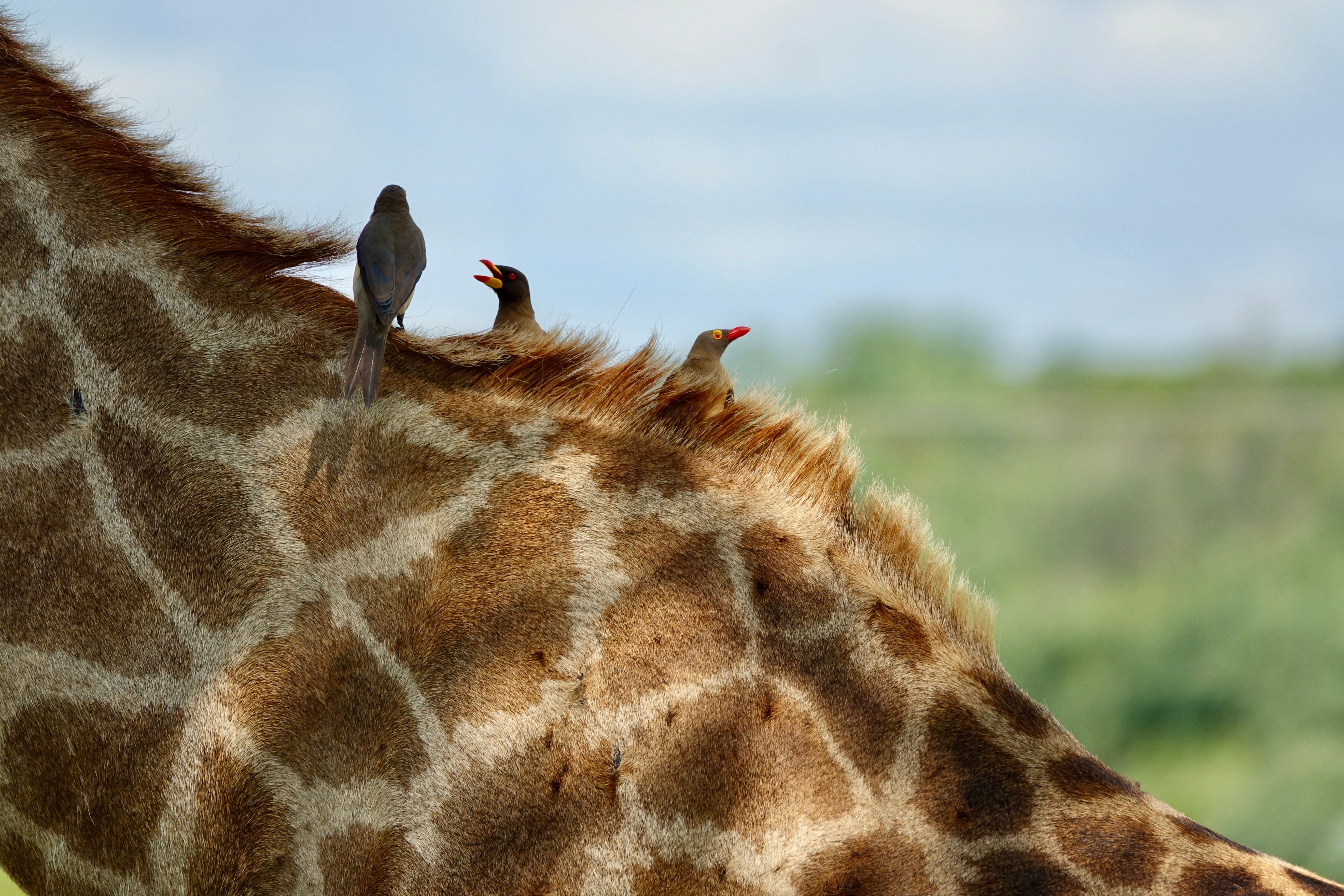
Oxpecker is an African bird that is part of the starling family. They are found in savannahs and woodlands, and they feed on insects, ticks, and other parasites that they find on the backs of large mammals such as zebras, antelopes, and rhinos. Oxpeckers are essential to their environment – they help to keep their host animals healthy by consuming parasites that could otherwise cause serious harm.An Oxpecker is a type of bird found in Africa and parts of Southern Europe, Asia and Madagascar. They are also known as tickbirds, or tick birds, because they are known for eating ticks off the backs of large animals such as cattle and zebras. Oxpeckers also eat other parasites such as mites and flies, as well as carrion, fruits, seeds and small insects.
Contents
Types of Oxpecker Animals
Oxpeckers are a group of birds, also known as tickbirds, that inhabit the African savannah. They are closely related to starlings and are found in most parts of sub-Saharan Africa. Oxpeckers feed mainly on insects, such as ticks, which they pick off the bodies of large mammals such as antelopes, zebras and wildebeests. They also eat the ticks that live on the skin of these animals and even those who feed on their blood. Oxpeckers have a mutualistic relationship with their host animals since they help keep them free from parasites while providing their own food source. There are two species of oxpeckers: the red-billed oxpecker and the yellow-billed oxpecker.
The red-billed oxpecker is smaller than its yellow-billed counterpart, measuring at about five inches in length. It has a bright red bill and face along with a black head and back. Its wings and tail feathers are brownish grey while its belly is white. This species is found mainly in eastern and southern Africa but its range extends to western Africa as well. It is often seen perched atop large mammals such as antelopes or zebras where it can pick off parasites feeding on their skin or blood.
The yellow-billed oxpecker is slightly larger than the red-billed species with an average length of six inches. It has black wings and back with yellowish feathers on its head, neck, belly and tail. Its face is white with a yellow bill that gives it its name. This species inhabits much of sub-Saharan Africa from Ethiopia down to South Africa but does not penetrate into western Africa like its red-billed counterpart. Like the red-billed species, it can be seen perched atop large mammals where it eats ticks off their skin or blood but will also eat fruit if available in its environment.
These two species of oxpeckers play an important role in controlling parasites in African ecosystems by helping keep large mammals free from infestations while providing themselves with food sources at the same time. They have evolved to become highly specialized for this task and play an important role in keeping these animals healthy and thriving in African savannas across the continent.
Physical Characteristics of the Oxpecker Animal
The oxpecker is a small, sparrow-sized bird found in Africa and southern Asia. It has a black-and-white striped body, with a red head and beak, and yellow eyes. It has strong claws that enable it to cling onto the back of large mammals such as buffalos and rhinos. The oxpecker is also known as the tickbird due to its habit of eating ticks off the backs of these animals. It also feeds on other insects such as flies, mites, and larvae.
The oxpecker has an average length of 16 cm (6 inches) and a wingspan that ranges from 22 to 24 cm (8 to 9 inches). Its feathers are generally black or brown in color. The bill is short and stout with a hooked tip. Its legs are long and powerful, enabling it to easily cling onto its host animal’s fur or hide.
On average, an adult oxpecker weighs between 25 to 30 grams (0.9 to 1 ounces). Its wings are broad and slightly rounded at the tips which allow it to maneuver easily while clinging onto its host animal’s back. The tail is relatively short compared to other birds, but still fairly long for its size.
The oxpecker is highly social bird that can often be seen in groups of four or more individuals foraging for food on the backs of large mammals such as elephants, buffalos, giraffes, zebras and rhinoceroses. They usually live in pairs or small family groups but may join larger flocks while roosting or during migration periods.
In conclusion, the oxpecker is a small bird found in Africa and southern Asia with a black-and-white striped body, red head and beak, yellow eyes, strong claws, short stout bill with hooked tip and long powerful legs which it uses to cling onto its host animal’s fur or hide. It typically lives in pairs or small family groups but may join larger flocks during migration periods or while roosting.
Oxpecker Animals
Oxpeckers are birds that belong to the family of starlings. They are also known as tick birds or tick-eating birds because they feed on ticks, which are parasites found on the coat of many animals. Oxpeckers are found in Africa and parts of southern Asia, but the majority of their population is concentrated in sub-Saharan Africa. They have adapted well to the savannah and woodland habitats that can be found in this region.
Oxpeckers have a unique relationship with large mammals such as zebras, wildebeest, and antelopes, who provide them with food as well as protection from predators. The oxpecker removes ticks from the mammal’s body and also consumes other insects such as flies and beetles that live on their hide. In return, these animals benefit from the alert call given by oxpeckers when they sense danger nearby.
Oxpeckers usually mate for life and form pairs that stay together all year round. They build their nests in trees or termite mounds where they can stay safe from predators. These birds usually lay two to three eggs which are incubated by both parents for around two weeks before hatching.
The oxpecker plays an important role in its ecosystem by controlling populations of ticks and other insect pests that can otherwise cause damage to livestock or crops. However, it has been observed that these birds sometimes cause harm to their host animals by pecking at them when searching for food or nesting material, leading to infections and even death in some cases.
Overall, oxpeckers provide a valuable service to African game parks by helping maintain balance within the ecosystem while forming an interesting symbiotic relationship with large mammals such as zebras, wildebeest, and antelopes who provide them with food and protection from predators.
Diet of the Oxpecker Animal
The oxpecker, also known as the tickbird, is a type of small passerine bird that is found throughout Sub-Saharan Africa. It mainly feeds on insects, such as ticks, which it obtains by clinging to the backs and necks of large mammals like buffalo and cattle. Additionally, it also eats small invertebrates like termites, grasshoppers, beetles, caterpillars and larvae. It also consumes fruit and nectar from flowers. In some cases, it has been observed eating small reptiles such as lizards.
The oxpecker typically searches for food while perched on the backs and necks of its host animals. It removes ticks from their fur by stabbing them with its sharp beak and then swallowing them whole. This behavior benefits its host by reducing the number of parasites on their bodies. In addition to feeding on parasites, the oxpecker also helps to clean the fur of its hosts by consuming dirt and debris that are embedded in it.
In addition to feeding on insects found on its hosts’ bodies, the oxpecker will also feed on insects found in their environment such as those found in trees or on foliage. It will also feed on fruits or other forms of vegetation that are available in its environment. During times when food is scarce, it will scavenge for scraps left behind by other animals or birds or even humans.
The oxpecker is an important part of many African ecosystems as it plays a vital role in controlling populations of parasites that can cause disease in livestock and other animals. It is an important part of many African cultures as well since they recognize its importance in controlling parasites and keeping animals healthy.

Behavioural Traits of the Oxpecker Animal
The Oxpecker is a small, sociable bird that is found in parts of Africa. It has a distinctive black and white plumage and a long, curved beak which it uses to feed on insects and other small creatures. The Oxpecker is known for its habit of perching on the backs of large mammals such as African buffalo, zebra, giraffe, and wildebeest. It is believed that this behaviour serves two purposes: it allows the Oxpecker to feed off of ticks and other parasites found on the animals’ hides, and it also serves as an alarm system for the host animals when predators are nearby.
The Oxpecker is an extremely social bird and will often form large flocks with hundreds of individuals. They communicate with each other through a variety of different calls and chirps. This species is also known for its loud “yeep-yeep” sound which they use to alert their hosts to potential danger. In addition to their loud vocalizations, they also use physical contact such as preening or pecking at their hosts as part of their communication repertoire.
Oxpeckers are diurnal creatures meaning they are active during the day and roost at night in trees or bushes. They are very agile flyers and can easily maneuver around obstacles while in flight. They feed mainly on insects but will supplement their diet with fruits, seeds, nectar, or even carrion if available. In areas where large ungulates are present, the Oxpeckers will often associate with them in order to feed off of ticks and other parasites found on them.
The Oxpecker plays an important role in African ecology by helping keep populations of certain insect pests under control. Its close association with large mammals can also be beneficial since it can alert them to potential danger from predators such as lions or hyenas. While these birds can be seen as pests by some due to their loud vocalizations or aggressive behaviour towards humans, overall they play an important role in maintaining healthy ecosystems in Africa’s savannahs and woodlands.
How do Oxpecker Animals Communicate?
Oxpeckers, also known as tick birds, are a group of birds found in Africa that have developed a symbiotic relationship with large mammals such as zebras, antelopes, and rhinoceroses. These birds help the larger animals by eating ticks and other parasites from their hides – this is why they are also known as “cleaner birds”. Oxpeckers also use their sharp beaks to alert the larger animals to potential danger.
Oxpecker communication is mainly done through vocalizations and body language. The most common vocalizations are loud chirps and whistles, which can be heard when two oxpeckers meet or when an oxpecker is trying to alert other animals of potential danger. They also use body language such as head bobbing and tail twitching to communicate with other oxpeckers and larger animals.
In addition to communicating with each other, oxpeckers also communicate with humans. They will often fly around humans or perch on their shoulders and head, making loud chirps or whistles in order to get the person’s attention. This behavior is thought to be a way for the birds to warn humans of potential danger in the area.
Oxpecker communication is essential for their survival in the wild. By understanding how these birds communicate, it’s possible to better protect them from harm and ensure that they continue to play an important role in African ecosystems.
Breeding and Reproduction of the Oxpecker Animal
The Oxpecker is a species of bird found in Sub-Saharan Africa. These birds are known for their ability to pick parasites off of larger animals, such as cattle and horses. They are also helpful in cleaning wounds and removing ticks. Breeding and reproduction among the Oxpecker is an interesting process that is important to understand.
Oxpeckers breed during the wet season, which typically runs from November to April. Males will establish a territory before they begin courting a female partner. Male birds will attract females by singing and gently preening them with their beaks. Once a pair has been established, they will begin building a nest together in an area where there are plenty of food resources, such as trees with fruit or insects on plants.
The female will lay anywhere from two to four eggs in the nest, which she will incubate for about 12 days. During this time, both parents will take turns feeding her while she is sitting on the eggs. The chicks typically hatch within 24 hours of each other and both parents will help feed them until they fledge at around 18 days old.
Once the chicks have left the nest, the parents may take them along as they search for food or teach them how to find it themselves. The young birds often stay with their parents until they reach sexual maturity at around seven months old, at which point they will leave to find a mate of their own and start another breeding cycle.
Understanding how Oxpeckers breed can help people better manage populations of these beneficial birds in areas where they are present. With careful management, these birds can continue to provide important pest control services while maintaining healthy populations of their own species.
Conclusion
The Oxpecker bird is an important part of the African ecosystem. It helps to keep the balance of the African landscape by providing food and shelter, as well as aiding with pest control. The Oxpecker also has a unique relationship with its host species, where it benefits from their presence by providing food and a place to rest. Though Oxpeckers have been known to cause some damage to livestock, their contributions far outweigh any potential losses that may occur. Through careful management and conservation efforts, we can ensure that the Oxpecker’s future is secure.
From their symbiotic relationship with other animals, to their role in controlling pests, the Oxpecker bird plays an important part in the African landscape. As custodians of this fragile environment, it is our responsibility to ensure its continued protection for future generations. We must work together to conserve the Oxpecker’s habitat and promote sustainable practices that will ensure its survival in an ever-changing world.
0 Comments