
The Ostrich is the largest living bird species in the world. It is a large flightless bird native to Africa and the Middle East, and is the only living species in its family and genus. It has a long neck, long legs, and can reach heights of over 6 feet (2 meters). The Ostrich is an omnivore, meaning it eats both plants and animals for sustenance. Its diet consists mainly of seeds, grasses, roots, insects, small mammals, lizards and snakes. It is well known for its powerful running ability; it can reach speeds of up to 45 mph (70 km/h).The Ostrich is a large flightless bird native to Africa. It is the largest living species of bird and lays the largest eggs of any living bird. Ostriches are omnivores, eating seeds, plants, insects, lizards, and small mammals. They have long necks and legs, and can run at speeds of up to 43 mph (70 km/h). They also have two toes on each foot instead of the usual three or four found on most other birds. Ostriches are known for their strength and size, but they are also surprisingly swift runners. The Ostrich is an iconic animal in African cultures, often associated with speed, strength and pride.
Contents
Physical Characteristics of Ostrich
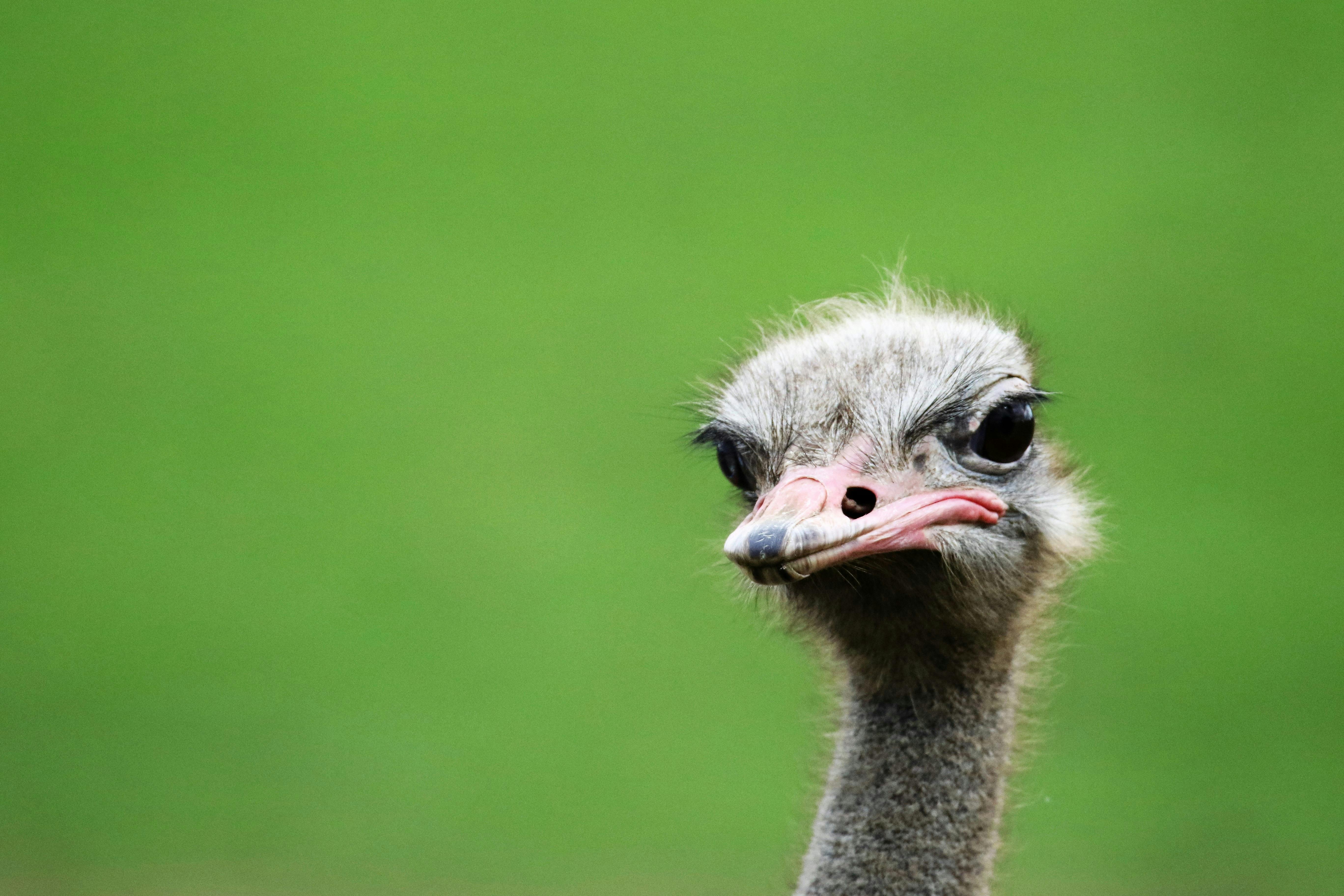
Ostriches are large and flightless birds that are native to Africa. They are the largest living bird species, with the adult male ostrich reaching a maximum height of up to 2.7 meters (8.9 feet) tall and weighing up to 156 kilograms (345 pounds). They have long, powerful legs that enable them to run at speeds of up to 40 kilometers per hour (25 mph). Their wings are small and nonfunctional, but they do help with balance while running. Ostriches have long, thick necks and small heads with two eyes set on either side. They also have a beak-like bill that is short and narrow. The feathers of an ostrich are unique in that they can be brown, white or black in color depending on the species. The tail feathers are short and stiff, while the neck feathers are long and fluffy. Ostriches also have two toes on each foot, unlike most other birds which have four toes. This helps them run more efficiently as it reduces friction when they move across the ground quickly.
Diet and Eating Habits of Ostrich
Ostriches are omnivorous creatures that feed on a variety of plants and animals. They forage for food on the ground, eating seeds, berries, grasses, leaves, flowers, roots, insects, small rodents and lizards. The diet of an ostrich varies depending on the season and what is available in its habitat. During dry seasons, they will eat whatever edible vegetation they can find. During wetter seasons they may eat more insects and animals.
Ostriches also have a very efficient digestive system which allows them to digest many foods that other animals cannot digest. The ostrich’s diet consists mostly of plant matter such as grasses and leaves but they also consume some animal matter such as insects and small mammals. This makes them an opportunistic feeder which means they take advantage of whatever food sources are available in their environment.
Ostriches can survive for long periods without food but prefer to eat several times a day when possible. They usually feed during the day but may also feed at night if food is available. They tend to be most active during the early morning and late afternoon when temperatures are cooler.
Overall, ostriches have a varied diet which includes both plants and animals depending on availability in their habitat. They are able to digest many different types of foods which helps them survive in harsh environments where other animals may not be able to survive.
Behavior and Adaptations of Ostrich
Ostriches are one of the most interesting birds, with a number of unique adaptations that allow them to survive in their natural habitat. The ostrich is capable of impressive speeds and can reach up to 70 km/h while running. It is also able to outrun any predator, making it one of the fastest animals on land. Additionally, it has powerful legs that can kick with tremendous force and its long neck gives it greater visibility over its surroundings.
Ostriches are diurnal animals, meaning they are active during the day. They live in herds and use a pecking order system to establish dominance within the group. They often communicate with each other through loud calls and even use their wings to produce a thunder-like sound which serves as a warning sign when danger is near. When threatened, ostriches will usually hide their heads in the sand or run away from danger instead of fighting back.
The ostrich has many physical adaptations that help it survive in its harsh environment. Its feathers are designed to help regulate body temperature and keep it cool during hot days in the desert. Its long legs help it cover large distances quickly while its toes have claws that act as brakes when running downhill or on slippery surfaces. Additionally, ostriches have excellent hearing which helps them detect potential predators from far away.
In addition to these physical adaptations, ostriches have developed behavioral strategies to survive in their environment as well. For example, they form flocks with other birds such as cranes or storks where they will share duties such as looking for food or watching for predators while others sleep or feed. Furthermore, they also develop relationships with larger mammals such as gazelles or antelopes which helps them spot potential predators faster than if they were alone.
Overall, ostriches have a number of unique physical and behavioral adaptations that help them survive in their harsh desert environment. From their powerful legs that allow them to outrun any predator to their ability to form relationships with other animals for better protection, ostriches are an incredibly adaptive species that will likely continue thriving for many years to come!
Habitat and Distribution of Ostrich
Ostriches are the largest living birds in the world and are found in parts of Africa and Southwest Asia. They inhabit open landscapes such as savannahs, woodlands, shrublands and deserts. Ostriches prefer to live in sparsely vegetated areas with flat terrain, so that they can observe potential predators from a distance.
The native range of the Ostrich is mainly limited to Africa, but some species are also found in Southwest Asia. Ostriches are found across most of sub-Saharan Africa, including Kenya, Tanzania, Uganda, Ethiopia, Somalia and South Africa. They have also been introduced to some parts of North Africa like Tunisia and Morocco as well as parts of Southwest Asia such as Israel, Jordan and Saudi Arabia.
Ostriches prefer habitats with abundant open spaces where they can run away from predators. They also need access to water sources like rivers or lakes for drinking. The vegetation in the area is usually grasses or shrubs suitable for grazing on insects or small mammals like hares. Ostriches need plenty of shade from hot temperatures during the day and shelter from windy conditions at night.
Due to their large size, ostriches require large territories for foraging and nesting material which can lead to habitat loss when their natural habitats are converted into agricultural land. Climate change has also had an impact on the distribution of these birds due to shifts in temperature patterns that affect their ability to survive in certain areas.
Overall, Ostriches require large open landscapes with access to water sources for drinking and nesting material for breeding purposes. However, their habitats are often threatened by human activities such as agriculture or climate change which can lead to population declines if not managed properly.
Reproduction Cycle of Ostrich
The reproduction cycle of ostriches starts with the mating season, which takes place in the spring. During this time, male ostriches will go through a courtship ritual in order to attract a mate. This includes displaying their colorful feathers and making loud noises. Once a female has been impressed by the male’s display, they will mate.
The female ostrich will then lay an average of 10 to 20 eggs over the course of several weeks. The eggs are large and typically brownish-green in color. The female will stay with the eggs for most of the day, taking short breaks every few hours to stretch her legs or forage for food. Meanwhile, the male will stand guard at night, protecting both his mate and their eggs from predators.
After an incubation period of around 40 days, the eggs will begin to hatch. The chicks are ready to leave their nest within 24 hours and can start eating on their own after 3 days. They are still dependent on their parents for protection and food until they reach maturity at around 14 months old.
At that point, they can reproduce themselves and start the cycle anew!
Predators
Ostriches are vulnerable to a variety of predators, including humans, cheetahs, lions, hyenas, leopards and wild dogs. The most dangerous of these is the human predator. Humans hunt ostriches for their feathers and meat, as well as for their eggs which are considered a delicacy in many countries. Additionally, humans can also pose a threat to ostriches by destroying their habitats or interfering with their natural migratory patterns.
Threats
In addition to predators, ostriches face several other threats to their survival. Climate change is having an increasingly negative effect on the ostrich population; extreme temperatures can be fatal for these animals and lead to decreased food availability. In some areas, hunting has led to population declines as well. Human encroachment on ostrich habitat is also a major problem; as humans move into ostrich habitats and build roads or develop land for agricultural purposes, it leads to the destruction of the animals’ nesting grounds and migratory routes.
Finally, disease can also be a significant threat to ostriches. Diseases such as avian poxvirus can spread quickly throughout an ostrich flock and cause high mortality rates in young chicks and immature birds. Additionally, if an entire flock becomes infected with a disease it can quickly decimate the population in an area.
Conservation Status of Ostrich
The conservation status of the ostrich is currently listed as Least Concern by the International Union for Conservation of Nature (IUCN). Despite their declining population over the past few decades, the overall population trend for ostriches is stable, and their numbers are not thought to be decreasing at a rate sufficient to qualify them for a more threatened category.
Ostriches inhabit several protected areas throughout their range, and hunting is regulated in many countries. However, despite these regulations, wild ostrich populations are still threatened by illegal hunting and habitat loss due to agricultural expansion and human settlement. These threats could potentially lead to a decline in the overall population of ostriches in the future.
In order to ensure that wild ostrich populations remain healthy and viable, it is important that conservation efforts continue to be implemented. This includes continued regulation of hunting activities and protection of existing habitats. It is also important that local communities are educated about the importance of conservation and have access to resources for sustainable management of ostrich populations.
In addition, captive breeding programs can also be beneficial for increasing wild ostrich numbers. Captive-bred birds can be released into protected areas or be used as part of a reintroduction program in areas where wild populations have been lost due to hunting or habitat loss.

Conclusion
Ostriches are unique animals that have some of the most fascinating characteristics. They have a distinctive appearance, which can be seen in both their features and body structure. They are also incredibly fast runners and have highly specialised digestive systems. Moreover, they have a number of other abilities such as the ability to fly short distances and the ability to run long distances in short bursts of speed. They also possess unique behaviours, such as how they care for their young and how they interact with other ostriches in their flock.
Overall, ostriches are a truly remarkable species that offer much insight into the animal kingdom. Their various characteristics and behaviours illustrate the complex nature of life on Earth and demonstrate how animals can adapt to different environments. Therefore, it is essential that we protect these beautiful creatures so that future generations can continue to enjoy their presence on our planet.
0 Comments