What is Reticulated python Animal
In this article
The Reticulated Python is a species of constrictor snake found in Southeast Asia. It is one of the world’s longest and most powerful snakes, capable of growing to lengths of up to 30 feet or more. Reticulated Pythons have a distinctive pattern of diamond-shaped markings on their bodies, and they are known for their ability to move quickly over short distances. They are also very strong, able to constrict prey with enough force to crush bones. Despite their impressive size and strength, Reticulated Pythons are non-venomous and are kept as pets by many people around the world.A Reticulated Python is a species of snake that is native to Southeast Asia. It is the world’s longest snake and can grow to lengths of up to 30 feet. It is also one of the most common and popular pet snakes, due to its large size and attractive patterned skin. Reticulated Pythons have an interesting coloration, with a black background and yellow-white patterns that look like a net or mesh. They are also strong and powerful constrictors, able to wrap around their prey and suffocate it by squeezing tightly.
Physical Characteristics of the Reticulated Python
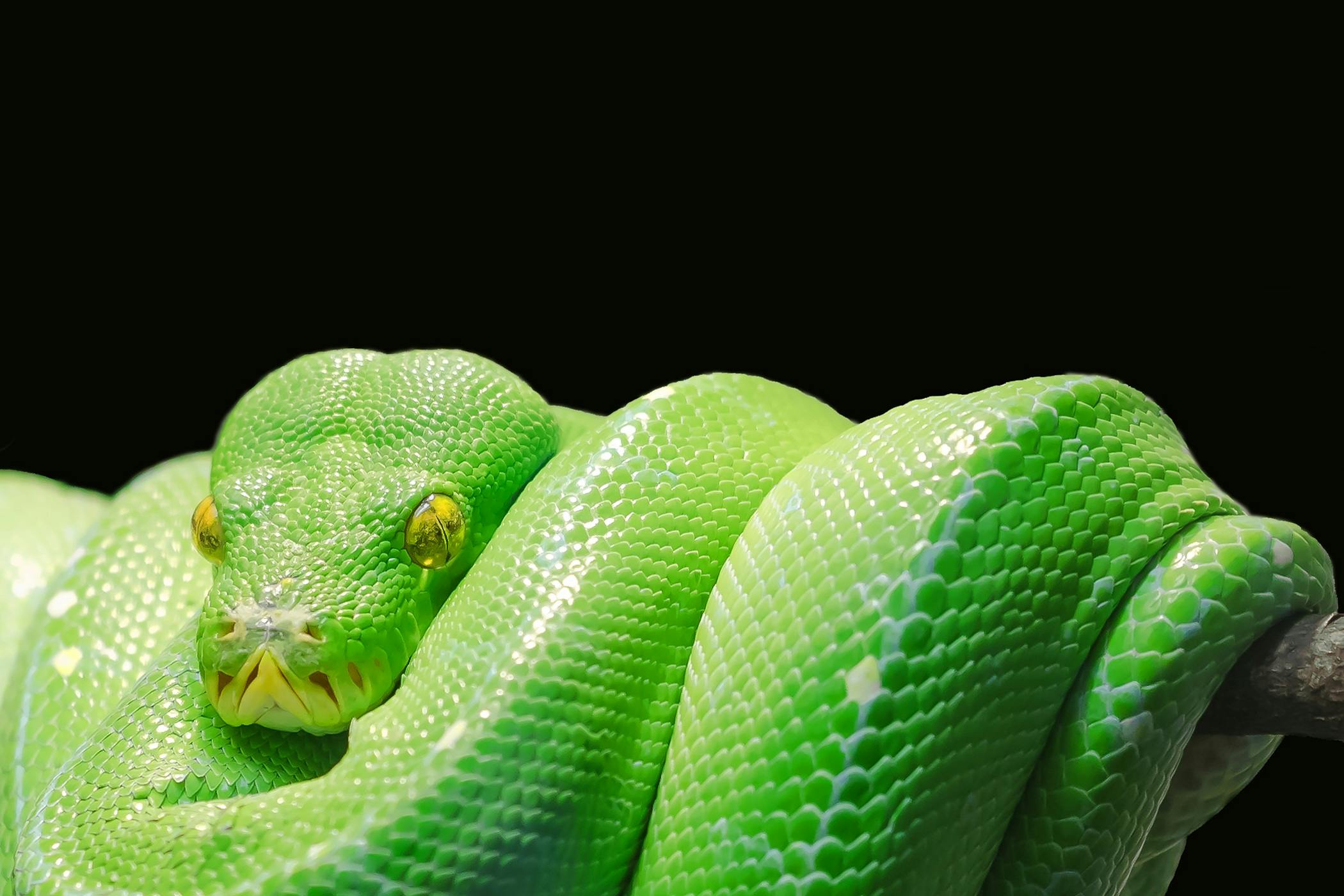
The Reticulated Python is a species of python that is native to Southeast Asia. It is one of the largest snakes in the world, with some specimens reaching up to 30 feet in length. The Reticulated Python has an elongated body with a broad head and small eyes. They have smooth, glossy scales that come in a variety of colors including yellow, green, black, and brown. The skin pattern consists of geometric shapes that resemble a net or grid, hence its name “reticulated”.
Reticulated Pythons have well-developed limbs that allow them to grab onto branches and tree trunks as they climb. Their tongues are forked and their tails are prehensile, allowing them to grasp objects when necessary. Their eyes are equipped with specialized cells called “tapetum lucidum” which helps them see in the dark. These snakes are also equipped with an organ called the “Jacobson’s organ” located on the roof of their mouths which helps them detect scents in the air.
Reticulated Pythons have sharp teeth that help them catch and hold onto prey such as small mammals, birds, lizards, frogs, and other snakes. They also feed on fish and eggs when they can find them. They use constriction to subdue their prey and can swallow animals up to three times their diameter due to their flexible jaws.
The Reticulated Python is an impressive animal with many unique physical characteristics that make it well adapted for its environment. Its large size and powerful muscles give it great strength while its specialized eyes allow it to hunt in low light conditions. Its prehensile tail provides excellent climbing ability while its forked tongue allows it to detect scents from far away. These features work together to make the Reticulated Python one of nature’s most impressive predators!
Habitat of the Reticulated Python
The Reticulated Python is found in a wide variety of habitats including tropical rainforest, mangrove swamps, and grasslands. It is one of the most widely distributed snake species in Asia, occurring from India to Southeast Asia and Indonesia. Their range extends from southern India across Sri Lanka, Bangladesh, Myanmar, Thailand, Cambodia, Laos, Vietnam, Malaysia, Indonesia and the Philippines. These snakes prefer lowland habitats with dense vegetation and high humidity. They are typically found near rivers or other bodies of water where they can find plenty of food sources.
Range of the Reticulated Python
The Reticulated Python is one of the most widespread species throughout its range in Asia. Its range extends from India and Sri Lanka eastward through Bangladesh, Myanmar (formerly Burma), Thailand, Cambodia, Laos, Vietnam and Malaysia to the Philippines and Indonesia. It also occurs on many Pacific islands including Borneo, Sumatra and Java. In some areas it can be found up to an elevation of 2200 m (7200 ft). It is also present in parts of Australia as well as some countries in Central Africa such as Congo and Gabon.
The Diet of the Reticulated Python
The reticulated python is a species of large snake found in Southeast Asia. They are one of the most popular pet snakes due to their size and beautiful markings. However, they require a specific diet to stay healthy and thrive in captivity.
Reticulated pythons eat a variety of animals including rodents, birds, lizards, and even other snakes. In the wild, they usually ambush their prey before killing it with their sharp teeth and powerful jaws. In captivity, they can be fed pre-killed prey or live rodents, depending on the preference of the owner. It is important to provide them with a balanced diet that mimics what they would find in the wild.
Reticulated pythons should be fed once or twice a week as adults, with juveniles being fed more often. Overfeeding can lead to obesity and other health issues such as fatty liver disease. The size of the prey should be appropriate for the size of the python – no larger than one-third its body length – and should be varied to ensure they are getting all necessary nutrients.
It is also important to monitor your reticulated python’s weight regularly to ensure it is not becoming overweight or underweight. If your snake is not consuming its prey within a few minutes of being offered it may indicate a health issue that needs to be addressed by a veterinarian.
Overall, providing your reticulated python with an appropriate diet will help ensure that it stays healthy and happy in captivity for many years to come!
Reproduction of the Reticulated Python
Reticulated pythons reproduce through internal fertilization. The female reticulated python will lay anywhere from two to four dozen eggs in a clutch and will stay coiled around them until they hatch. The incubation period for the eggs is approximately two months, and the female reticulated python will remain with her eggs until they hatch. After hatching, the young snakes are left to fend for themselves and are not cared for by the mother.
Lifespan of the Reticulated Python
The average life span of a reticulated python in the wild is estimated to be between 10 and 15 years. In captivity, however, these snakes can live much longer; some have been known to live for up to 25 years or more with proper care.
Behavior and Temperament of the Reticulated Python
Reticulated pythons are one of the most popular pet snakes in the world. They are known for their docile nature and calm temperament, which makes them an ideal pet for beginners. Despite its large size, it is not an aggressive snake and does not show any signs of aggression unless provoked.
Reticulated pythons are relatively easy to handle, as they do not tend to struggle or attempt to escape when being handled or held. In fact, they can become quite attached to their owners over time and enjoy being handled or cuddled. However, they should never be handled by inexperienced individuals, as they can still bite if they feel threatened or uncomfortable.
Reticulated pythons have a slow metabolism, so they don’t need to be fed as often as other snakes. They can go up to two weeks without feeding and should only be fed every two weeks or so. They also require a large enclosure that is clean and well-maintained with a suitable substrate such as coco coir, bark chips, or newspaper pellets.
In the wild, reticulated pythons are mainly nocturnal animals that feed mainly on small mammals and birds. In captivity however, they can learn to recognize their owners and will respond positively when given food or attention. They may even become tame enough to allow gentle handling by their owners.
Overall, reticulated pythons make great pets for those who are willing to take the time to properly care for them. With proper husbandry techniques such as regular feeding schedules and clean habitats, these snakes can provide years of enjoyment for their owners.
Robotics and Interaction with Humans
Robotics is a rapidly evolving field with the potential to change the way we interact with the world. Robotics technology is advancing at a rapid pace, and is revolutionizing the way we interact with machines. Robots are being used in a variety of applications, from industrial automation to medical care. With robotics, humans can have more control over their environment and make better decisions. The development of robotics has opened up new possibilities for humans to interact with their environment in ways never before possible.
Robots are being used to perform tasks that would otherwise be dangerous or too difficult for humans. They are also being used to assist humans in performing tasks more efficiently and safely. With robots, humans can complete tasks faster and more accurately than ever before. This allows us to be able to do more with less effort, and increases our productivity.
Robots are also being used to interact with humans in ways that were not previously possible. Robots can be programmed to respond to voice commands or gestures, allowing them to become interactive partners in a variety of activities. This type of interaction creates opportunities for new forms of communication between humans and robots, which can lead to greater understanding between both parties.
In addition, robots are being used in healthcare settings as assistants for surgeons and emergency responders. By using robots, doctors and nurses can perform complex medical procedures without having direct contact with people’s bodies. This reduces the risk of infection and reduces the amount of time needed for each procedure.
The use of robots in everyday life is becoming increasingly common, and it is becoming clear that they will play an important role in our society going forward. Robotics technology has revolutionized how we interact with our environment, making our lives easier and more efficient than ever before. As this technology continues to evolve, it will create even more opportunities for humans to interact with robotic devices in ways that were unimaginable just a few years ago.
Reticulated Python
The Reticulated Python is one of the most well-known and wide-ranging of all python species. It is found throughout parts of Southeast Asia, including Indonesia, Malaysia, Thailand, Vietnam, Cambodia and the Philippines. It is a large snake, typically reaching between 6-9 m in length. The Reticulated Python is an important part of many ecosystems in its native range and has been used by humans for centuries for its meat, skin and other products. However, its populations face a number of threats due to habitat loss, hunting and exploitation for the international pet trade.
The International Union for Conservation of Nature (IUCN) Red List lists the Reticulated Python as Least Concern (LC), meaning that it is not currently considered threatened with extinction. This indicates that the species’ populations remain relatively stable despite ongoing threats from human activities. The IUCN also lists several subspecies as Near Threatened or Vulnerable due to their limited distributions or impact from human activities. These include the Burmese Python (Python molurus bivittatus), which is listed as Vulnerable due to over-collection for the pet trade.
In order to adequately protect this species and its subspecies, further research into population trends and threats need to be conducted. Additionally, improved conservation efforts need to be implemented in order to reduce habitat destruction, hunting and exploitation of this species for commercial purposes. Finally, greater enforcement of existing laws regarding wildlife trafficking needs to be enforced in order to prevent illegal smuggling of this species into foreign markets.
Conclusion
Reticulated pythons are an amazing animal species. They are the longest living snakes in the world, growing up to 20 feet in length, and they have a unique color pattern that makes them stand out from other snake species. With their impressive size, they can be an intimidating presence in nature and can be difficult to handle in captivity. However, with proper care and handling, reticulated pythons can be kept as a pet or used as a show animal. They also have many different uses in the pet trade due to their size and beauty.
All in all, reticulated pythons are an impressive animal species that deserve respect when handled by humans. With proper care and handling, these animals can provide great enjoyment for those who want to keep them as pets or use them for shows or other purposes.
About