
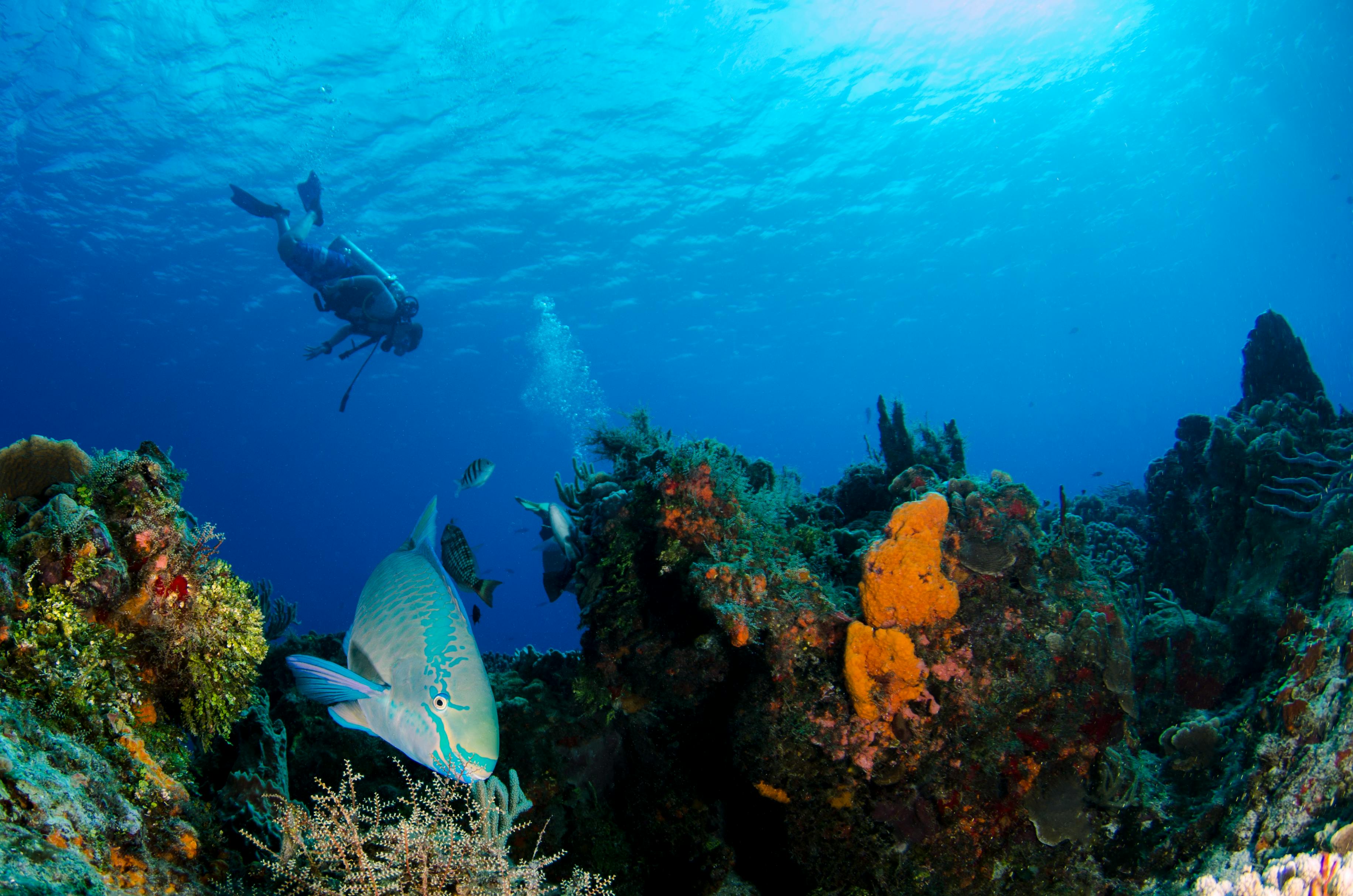
Parrotfish is a type of tropical marine fish, commonly found in the shallow waters of coral reefs around the world. They have bright colouration and a unique shape that makes them easily recognizable. With their protruding snout and fused jaw, they are often likened to their namesake, the parrot. Parrotfish play an important role in maintaining healthy coral reef systems by consuming algae that can otherwise damage corals if left unchecked. They also produce sand through their intestinal process which contributes to beaches around the world.A Parrotfish is a type of tropical marine fish that is recognizable by its bright colors and sharp, curved beak. They are mostly found in the shallow reefs of the Caribbean and Indo-Pacific oceans. Parrotfish have thick, heavy scales that come in a variety of vivid colors, including blue, green, yellow and orange. They can grow up to 3 feet in length and feed on small invertebrates, algae and coral polyps.
Contents
Parrotfish: Overview
Parrotfish are a type of tropical fish found in warm, shallow waters around the world. They are known for their brightly colored scales and their ability to make loud clicking sounds. Parrotfish come in a variety of sizes and shapes, from small schooling species to large solitary predators. The diet of parrotfish consists mainly of algae, coral, and small invertebrates. They play an important role in maintaining healthy coral reef ecosystems by grazing on algae and preventing it from overgrowing the reef.
Physical Characteristics
Parrotfish have laterally compressed bodies that are covered with thick scales. They can range in size from 10 cm (4 inches) to more than 1 m (3 feet). Some species have large protruding eyes while others have eyes set low on their head. All parrotfish have strong beaks made up of fused teeth that they use to scrape away at rocks and coral in search of food. Their bright colors serve as a warning to predators and also act as camouflage when they are resting on the reef.
Behavior
Parrotfish are diurnal animals, meaning they spend most of their time during the day foraging for food and avoiding predators. At night they find a safe place to sleep such as a crevice or hole in the reef structure or buried in the sand. When threatened, parrotfish use their bright colors and loud clicking noises to scare away predators or signal danger to other members of their school. They can also produce clouds of mucus that can confuse predators or act as an alarm system for any approaching threats.
Reproduction
Most species of parrotfish form monogamous pairs during mating season that will last until one partner dies or goes off to mate with another fish. The female will lay her eggs on the substrate while her partner guards them until they hatch into larvae after several days. Once hatched, the larvae will drift with ocean currents until they reach an area with suitable habitat where they will settle into adulthood.
Identification of Parrotfish
Parrotfish are a family of colourful, tropical fish that can be found in waters all around the world. They have distinctive beak-like mouths, bright colours, and long tail fins. Identification of parrotfish can be done by looking for certain characteristics. The most obvious feature is their beak-like mouths which are used to break up food items such as coral, algae, mollusks, and crustaceans. They also have bright colours on their scales ranging from blues, greens, yellows and oranges. These colours can vary greatly between species and even within the same species. Parrotfish also have long tail fins which help them to maneuver quickly in the water.
Another way to identify parrotfish is by looking at their size. They range from very small (less than 5 inches) up to more than three feet in length depending on the species. Additionally, some species may have different body shapes or markings that help to distinguish them from other fish in the same family.
Finally, it’s important to note that parrotfish have a unique method of feeding that helps them survive in the wild. They use their beak-like mouth to break up coral and other hard-shelled food items so they can eat them more easily. This type of feeding behavior is part of what makes these fish so fascinating to watch!
Overall, identification of parrotfish can be done by looking for certain characteristics such as their distinctive beak-like mouths, bright colours on their scales, long tail fins and different body shapes or markings depending on the species. Additionally, it’s important to remember that these fish feed differently than other types of fish which helps them survive in their natural environment.
Habitat of Parrotfish
Parrotfish are found in a variety of coral reef habitats, from shallow lagoon reefs to deeper fore reef slopes. They inhabit tropical and subtropical oceans worldwide, specifically the Indian, Pacific and Caribbean Oceans. Parrotfish also occupy mangrove-lined estuaries and seagrass beds in many parts of the world.
Parrotfish are typically seen in small shoals, often congregating around areas with plenty of coral or other forms of hard substrate. This helps them scrape algae off of hard surfaces with their teeth, which they do to feed on algae and plankton. During the day they can be seen grazing on algae or hiding in crevices and caves within reefs for protection. At night they rest in a silty patch under ledges or in crevices.
The habitat preferences of different species vary slightly, but all parrotfish need sheltering habitats that provide plenty of food sources like coral reefs and seagrass beds. They generally avoid sandy habitats where there is very little food available. Parrotfish need access to shallow water to feed during the day and deeper water for protection at night. They also require healthy coral reefs for reproduction as their eggs are laid on hard substrates like rocks or corals.
Overall, parrotfish rely heavily on healthy coral reefs for survival, so any threats to these ecosystems can have direct consequences for their population numbers.
Diet of Parrotfish
Parrotfish are primarily herbivorous, with a diet consisting mainly of algae, invertebrates, and benthic organisms. They feed on the bottom of reefs, consuming algae and small invertebrates. Some species are known to feed on the coral itself, scraping away at the surface with their beaks and eating the tissue. Parrotfish also consume detritus and plankton from the water column. The majority of their diet is made up of seaweeds and macroalgae, which they scrape off rocks with their strong beaks. They are also known to graze on seagrasses and even consume small amounts of mangrove roots. Their diet varies depending on the species; some consume more plankton while others prefer macroalgae.
Parrotfish play an important role in coral reef ecosystems by grazing on algae that can smother corals if left unchecked. By consuming large amounts of algae, parrotfish help keep coral reefs healthy and prevent them from being overwhelmed by algal growth. Additionally, their digestive process results in a large amount of waste which contributes to reef sedimentation, helping to maintain a healthy balance in reef systems.

Lifespan of Parrotfish
The lifespan of parrotfish varies depending on the species. Most species of parrotfish can live up to 10 years, while some species may live up to 20 years. The average size of a parrotfish is between 25 and 30 cm, but the larger species can reach up to 50 cm in length. The growth rate of parrotfish also varies depending on the species. Smaller parrotfish typically grow faster than larger ones, while some species may reach their full size in just one year.
Parrotfish are particularly vulnerable to predators because they are brightly colored and tend to stay close to the surface of the water. As a result, they have developed various strategies for evading predators, such as changing coloration or hiding in coral reefs. These strategies help them survive longer and increase their lifespan.
Parrotfish also have another unique adaptation that helps them survive longer: they have specialized teeth that allow them to scrape algae off rocks and coral reefs for food. This adaptation helps them survive in environments where food is scarce and allows them to live longer than other fish that don’t have access to these food sources.
In conclusion, the lifespan of parrotfish depends on a variety of factors including species, size, growth rate, and predation levels. With proper care and a healthy environment, parrotfish can live up to 10-20 years in captivity or even longer in the wild.
Reproduction
Parrotfish are typically oviparous, which means they lay eggs in the water. The eggs are fertilized externally by the male, who releases sperm into the water after the female lays her eggs. The fertilized eggs float to the surface and hatch within a few days. After hatching, the baby parrotfish will live in shallow waters until they grow larger and can move to deeper waters.
Breeding Habits
Parrotfish are solitary animals, meaning they do not form large schools like some other fish species. They generally breed during the warmer months of spring and summer when water temperatures are more suitable for their reproduction process. The males will compete for females by displaying their vibrant colors and displaying aggressive behaviors such as biting or chasing one another away from a potential mate. Once a female has been attracted to a male, the two will swim together for several minutes before mating takes place. After mating, the female will lay her eggs and then return to her solitary lifestyle until she is ready to reproduce again.
Mating is usually done during twilight hours as this is when parrotfish feel most comfortable and secure from predators. While parrotfish do not have any parental care after spawning, they can live up to 20 years in captivity if their environment is kept clean and healthy.
Behavior of Parrotfish
Parrotfish are known for their vibrant colors, but they also have some interesting behaviors. The most notable behavior is their feeding habits. Parrotfish use their unique beaks to scrape algae and coral off of rocks, which helps to keep the reef healthy by limiting the growth of algae and coral. They also have a unique social structure where they form small groups with a dominant male in charge.
Parrotfish are also very active during the day, swimming around the reef and searching for food. They can be seen chasing each other and exploring different parts of the reef. At night, parrotfish will retreat to their sleeping spot, which could be a crevice in the reef or even a large boulder.
Parrotfish are also known for their cleaning behavior. They will clean other fish by picking parasites off of them or even sucking up small pieces of detritus from rocks and sand. This helps keep the reef healthy as well as ensuring that no one fish is carrying too many parasites or bits of debris on its body.
Overall, parrotfish are an important part of any healthy coral reef ecosystem due to their unique behaviors. They help keep the reefs clean by scraping away algae and coral, forming small social groups with a dominant male leader, chasing each other around during the day, and cleaning other fish at night.
Conclusion
Parrotfish are a fascinating species of fish that can be found in a variety of habitats worldwide. They have evolved over millions of years to become the colorful, vibrant creatures they are today. They play an important role in the coral reef ecosystems, providing essential nutrients and helping to maintain healthy coral reefs. Parrotfish have unique adaptations that allow them to live in their environment and feed on hard surfaces such as coral or rocks. They also have the ability to change their color depending on their surroundings, helping them blend into their environment for protection from predators. Parrotfish populations are declining due to overfishing and habitat destruction, so it is important that we protect these animals and conserve their habitats for future generations.
Parrotfish continue to fascinate us with their unique adaptations and vibrant colors. Their importance in maintaining healthy coral reef ecosystems should not be underestimated, and we must do our part to ensure that these animals are able to thrive for many years to come.
0 Comments